
Ola Electric
2025
ADAS design for Ola Electric two-wheeler displays
Advance Driver Assistance Systems
HMI Design
OVERVIEW
I led the end-to-end research & design of ADAS safety warnings for Ola’s scooter & bike lineup — a system that introduces features like Front and Rear Collision Warnings, Blind Spot Detection, and Speed Limit Alerts.
1/1
Project
Designing safety-critical ADAS features (Advanced Driver Assistance Systems) — including Front Collision Warning, Rear Collision Warning, Blind Spot Detection, and Speed Limit Warning for an electric two-wheeler's existing display system.
1/2
Challenge
The core challenge was integrating these potentially life-saving alerts into a familiar interface without disrupting rider experience or introducing new learning curves that could compromise safety.
Some of the key constraints were as follows:
↳ Rider muscle memory with familiar display
↳ Limited space on compact scooter screens
↳ Tight timing from sensor detection to alert
1/3
Process
Step 1: Research & Benchmarking
Analysed ADAS warning implementations across multiple vehicle categories around the globe to identify effective communication strategies.
Step 2: Understanding Tech Feasibility
Worked closely with engineering and hardware teams to understand sensor detection, data processing, and display timing to understand real-time system capabilities.
Step 3: Design & Iterations
Developed and refined design concepts through rapid feedback cycles and testing.
1/4
Team


RESEARCH & BENCHMARKING
Explored how leading global vehicle models communicate ADAS warnings to learn what works and what doesn’t.

2/1
Methodologies
Ground Research
Hands-on evaluation of available vehicles in our studio, including brands like Toyota and Hyundai, to experience real-world ADAS warning designs firsthand.
Desk Research
Conducted extensive online research using platforms like YouTube, Perplexity, and web resources to gather ADAS implementation insights at the global level.



2/2
Key Findings
Based on extensive research into collision warning systems across global vehicle implementations, some of the key findings were as follows:
1. Static Icon Limitations
Most vehicles rely on traditional icon indicators that fail to convey warning intensity or urgency, reducing driver response effectiveness.
2. Full-Screen Colour Alerts
Some vehicles use immersive colour overlays on displays to capture attention during critical moments, particularly effective in high-distraction scenarios.
3. Haptic Feedback
Some vehicles enhance collision warnings by integrating haptic feedback, such as handlebar vibrations or seat pulses, alongside visual alerts, providing multi-sensory cues.
4. Directional Warning Placement
Some new-generation vehicles position warnings directionally on the display to indicate threat direction (left/right/front), enabling faster threat localisation.
5. Progressive Warning Escalation
Some systems use graded alert stages (caution → warning → critical) with increasing visual intensity to match threat severity without causing alarm fatigue.
2/3
Standouts
Out of all the analysed vehicles, these stood out for their innovative and effective ADAS warning strategies:

Verge TS Pro
Sets the benchmark for visual warning clarity through sophisticated graphics, strategic colour coding, and directional threat indicators that enable instant recognition without requiring focused attention.

BMW Motorrad
Implements a two-stage escalation system: Level 1 delivers visual warnings with handlebar vibration, while Level 2 triggers full-screen alerts with automatic emergency braking intervention.

Ducati Multistrada
Features multi-level warning progression that seamlessly integrates with active safety systems, automatically applying braking force when critical collision thresholds are reached.

Kawasaki Ninja
Combines both instrument cluster and mirror-mounted indicators with progressive intensity levels, providing redundant visual cues in the rider's natural sight line.

Naxeon
Innovatively uses handlebar-mounted directional lighting to indicate threat direction, placing critical safety information directly in the rider's peripheral vision during active maneuvering.
TECH FEASIBILITY
Deep dive with engineers & HMI team to define system feasibility and limitations that shaped every design decision.

3/1
Key Components
The ADAS warning system works on 3 key components — camera sensors, ultrasonic sensors, and radars.
These sensors keep an eye on the environment to spot other vehicles, obstacles, or anything that could cause a collision.
All this information is sent to a processing unit, a small but powerful computer on the vehicle.
3/2
Working Model
Stage 1: Detection
All three sensors constantly scan the environment to spot nearby vehicles, obstacles, or hazards.
Stage 2: Confirmation
The system processes and cross-checks sensor data to reduce false alarms and confirm if a detected object is truly a threat.
Stage 3: Threat Evaluation
The system evaluates the urgency of the threat based on distance, speed, and direction to decide whether to alert the rider.
Stage 4: Alert Communication
The system then sends clear warnings/alerts to designated spots on the vehicle, such as the display.
The entire process happens super fast, usually within 100 to 300 milliseconds from sensing a threat to alerting the rider.
This speed is is crucial, as humans typically take 1-2 seconds just to react.
3/3
Key Findings
Strict Time Constraints
The entire detection-to-alert cycle happens within 100-300 milliseconds, so animations and transitions must be minimal and instantaneous to avoid delaying critical communication.
Limited Display Capabilities
Two-wheeler displays have lower resolution and smaller screen sizes, which means they have less processing power. As a result, more visual changes on the display require more power and can lead to communication delays.
DESIGNS
Introducing ADAS for Ola Electric: Designing alerts that deliver clarity and urgency exactly when riders need them.
4/1
Collision Warning
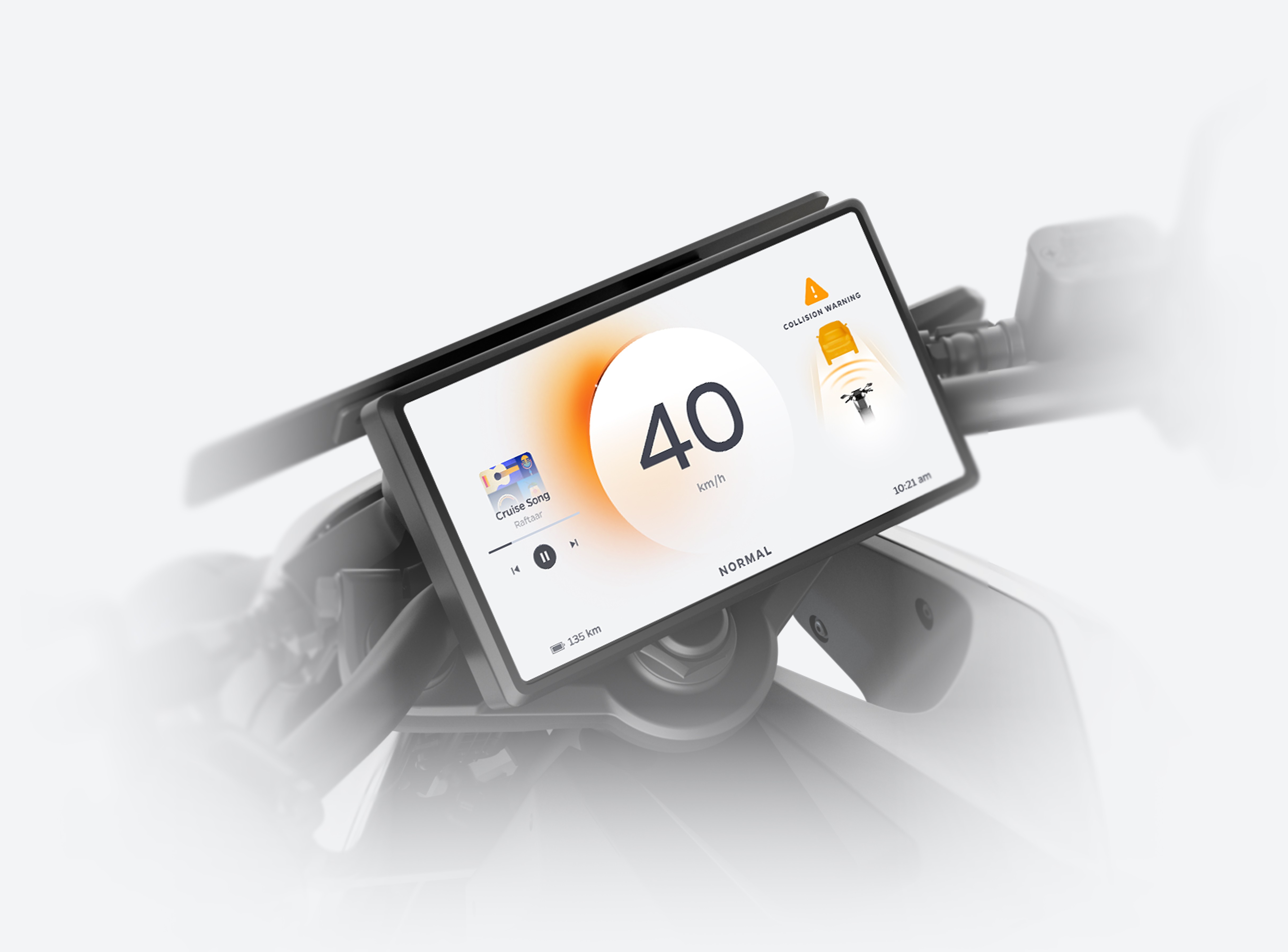
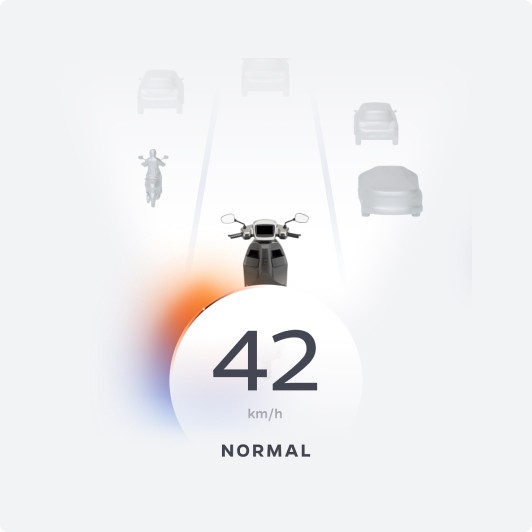
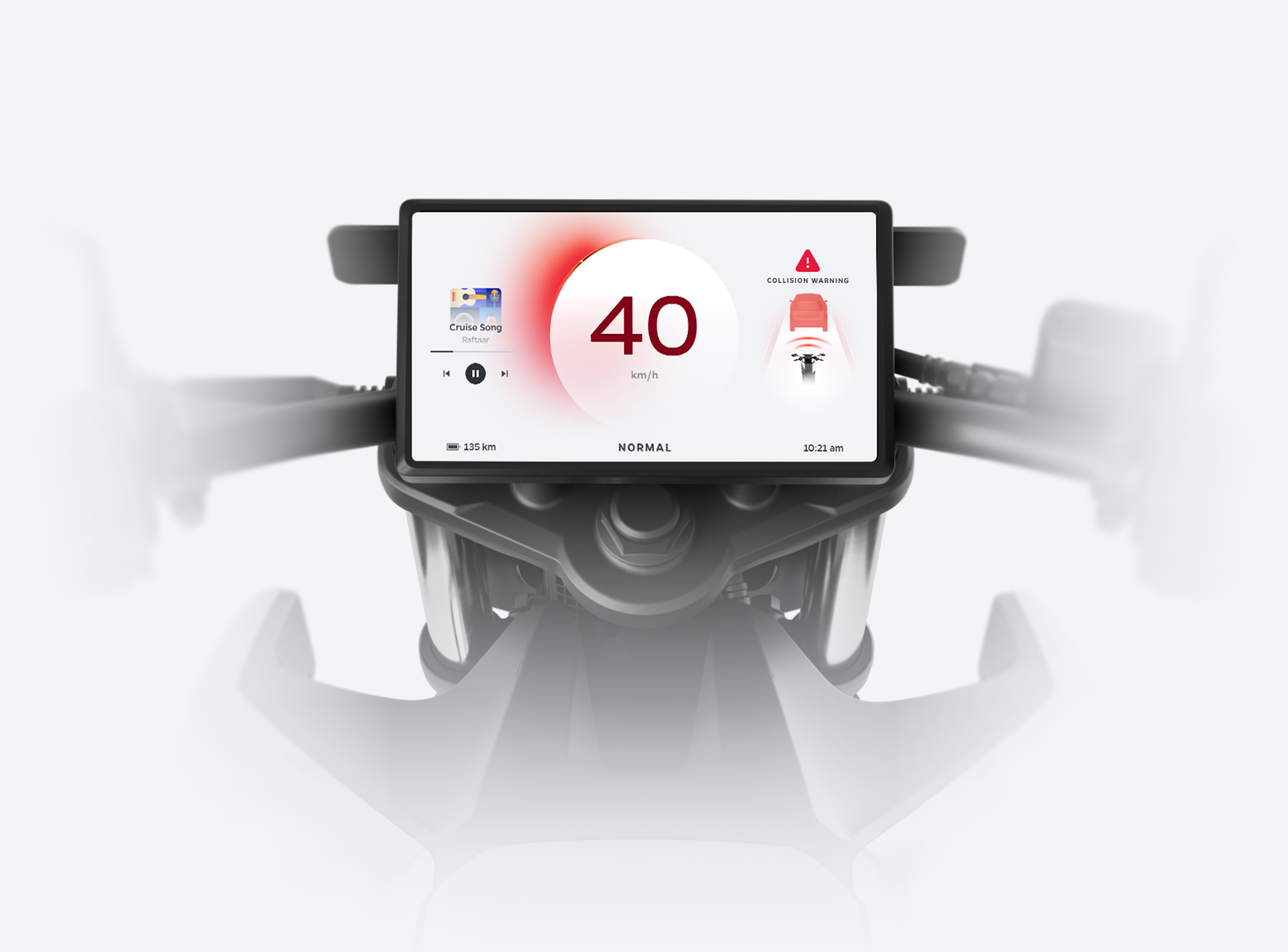
Provides forward and rear collision warnings through clear graphical representations, helping riders quickly understand the situation at a glance.
Colour-coded elements with universal logic to indicate threat severity — amber signals warnings, while red denotes critical alerts.
Utilises the speedometer glow as the primary alert source, as it is one of the most visible and constantly moving parts of the display — any changes here naturally attract rider attention, minimising the risk of missed alerts.
4/2
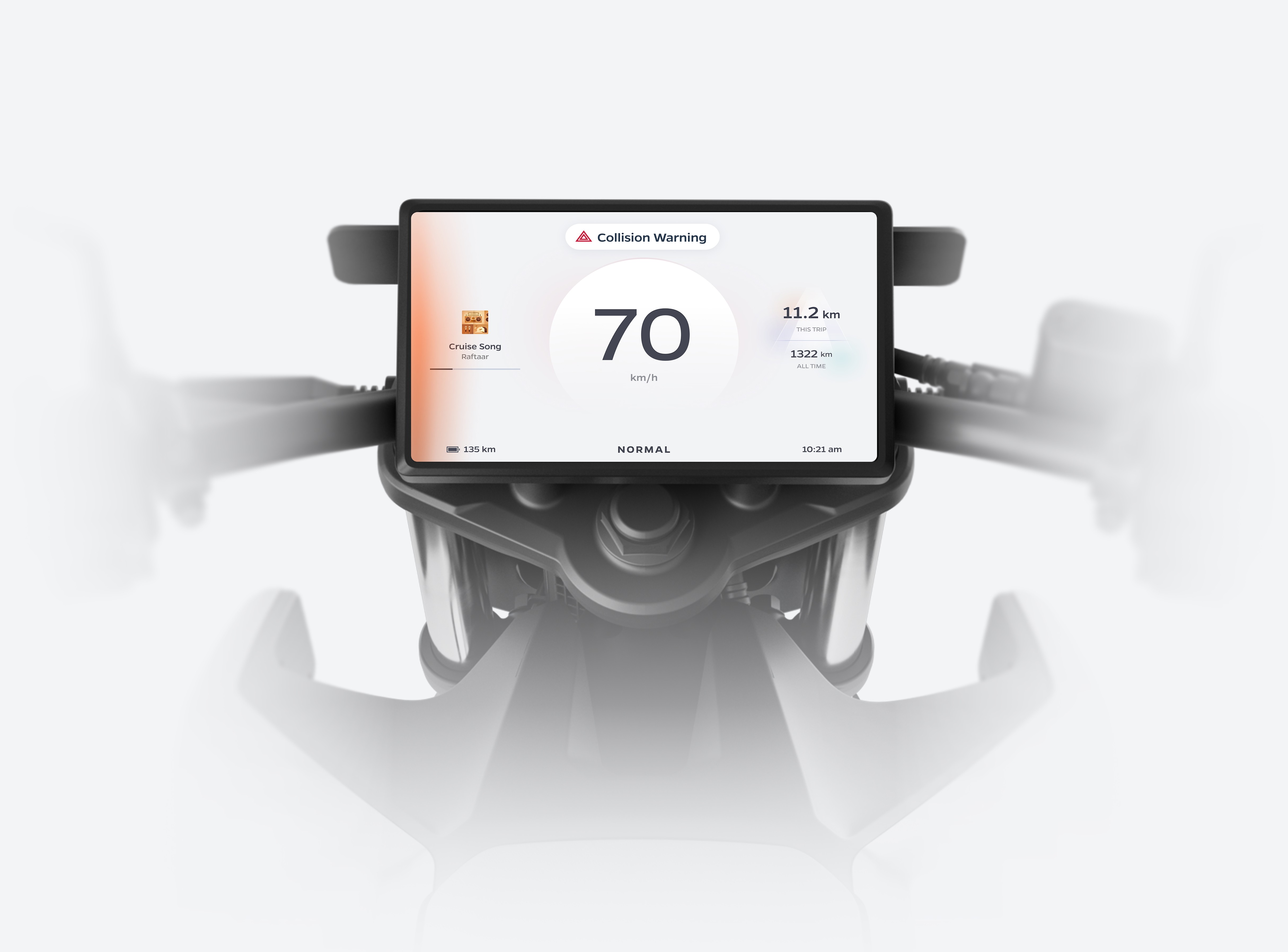
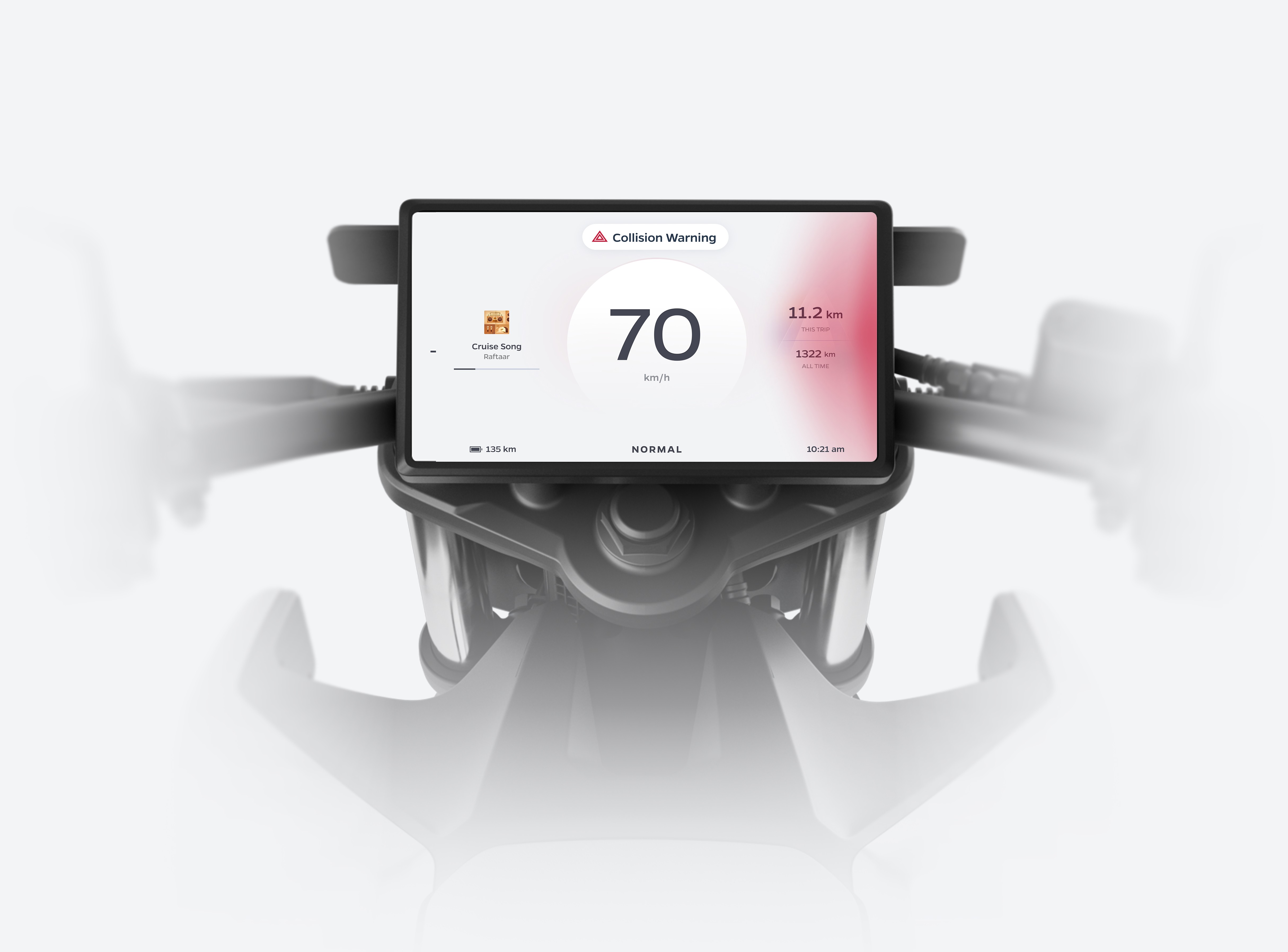
Blind Spot Alert
Simple, colour-coded directional glows warn riders about objects in their blind spots. The closer the object, the more intense the glow becomes, providing an immediate and intuitive sense of proximity.
4/3
Speed Limit Alert
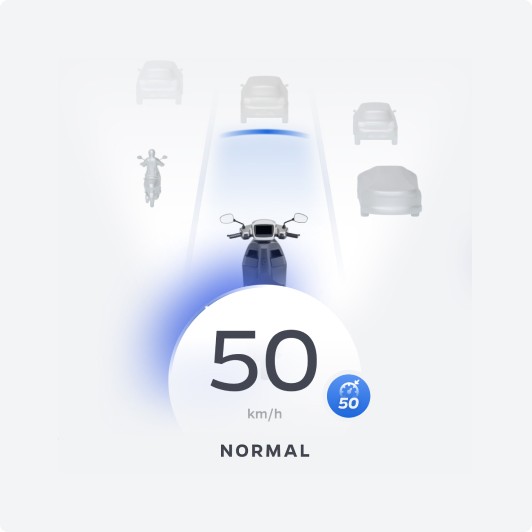
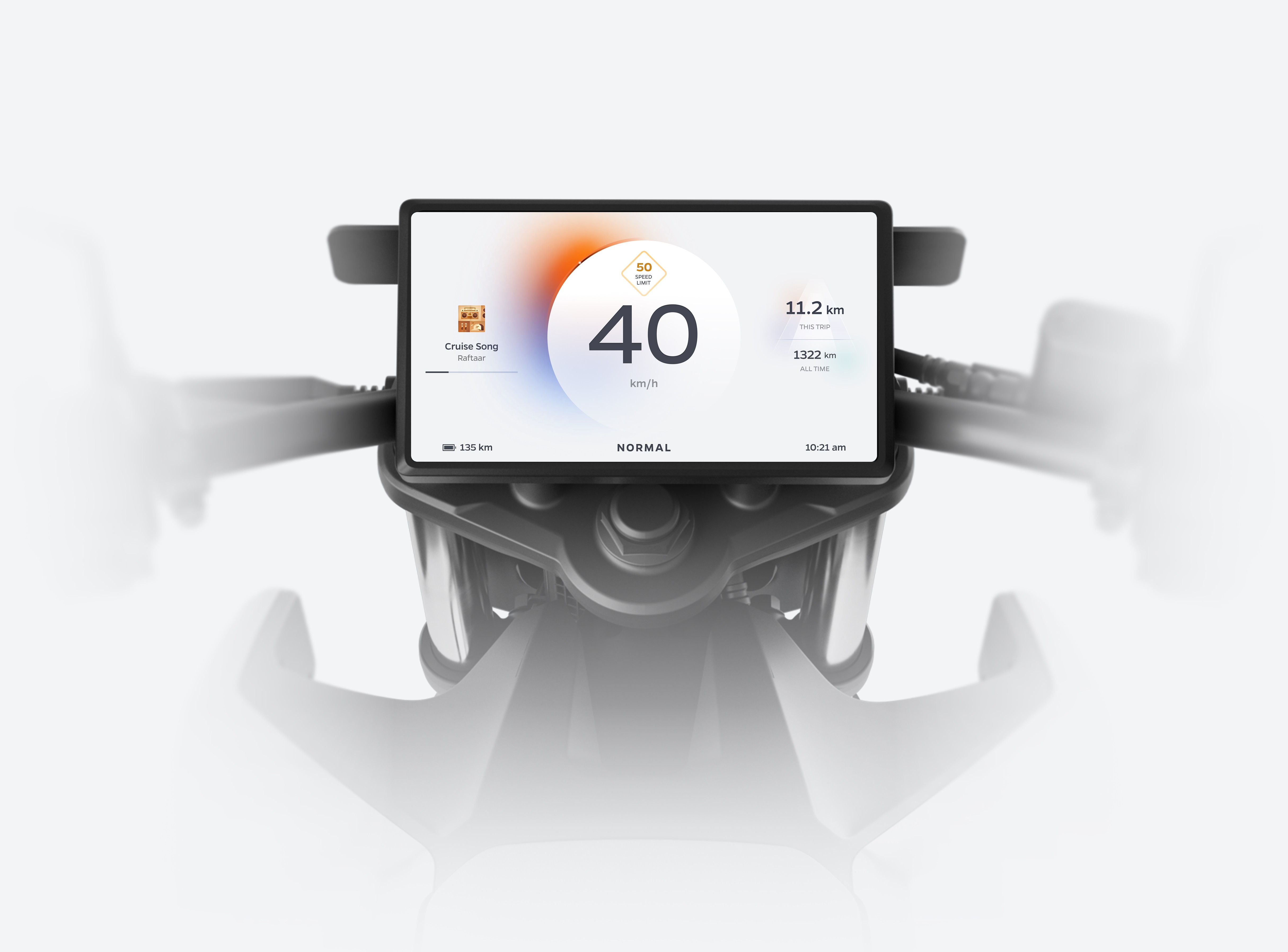
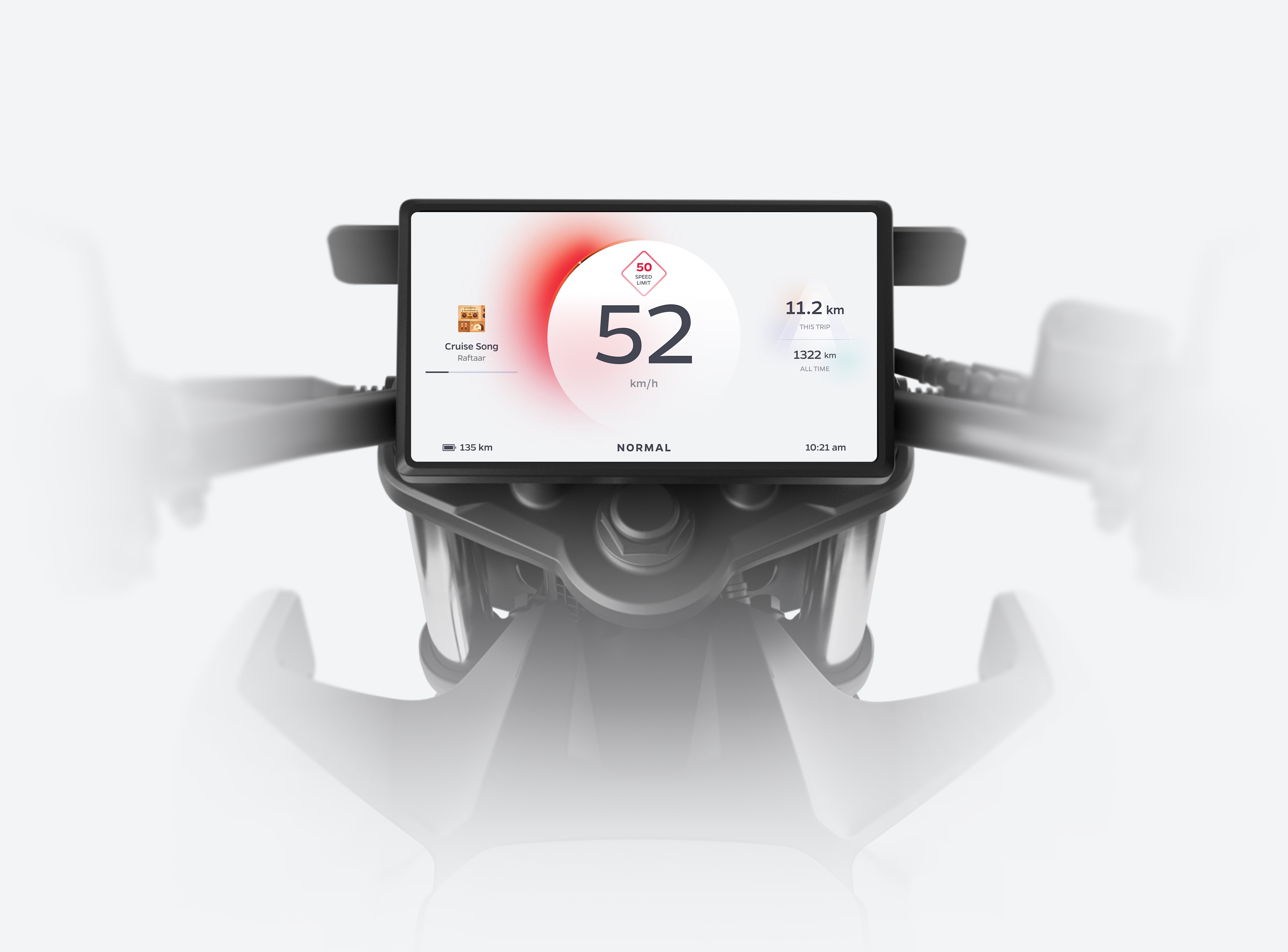
A simple, blinking icon-based speed limit indicator mimics real-world sign shapes and appears on the speedometer whenever the vehicle enters a speed zone.
The icons are dynamically colour-coded, amber signals a warning, and when the speed exceeds the limit, they turn red and blink faster to attract the rider’s attention instantly.
This design ensures that critical information is communicated quickly and effectively, helping riders stay within safe speed boundaries.
In India alone, over 150,000 two-wheeler accidents are reported annually, many of which could be prevented with timely, clear warnings.
Working on this project was both challenging and deeply fulfilling because every design decision I made was directly tied to rider safety.
Knowing that this work could help reduce even a fraction of those accidents brings a real sense of purpose.
And that’s a wrap — hope you enjoyed it!
The End